| Weather type |
Approx. period |
Characteristics (relative, not absolute) |
Aspects during transition into |
Exceptions |
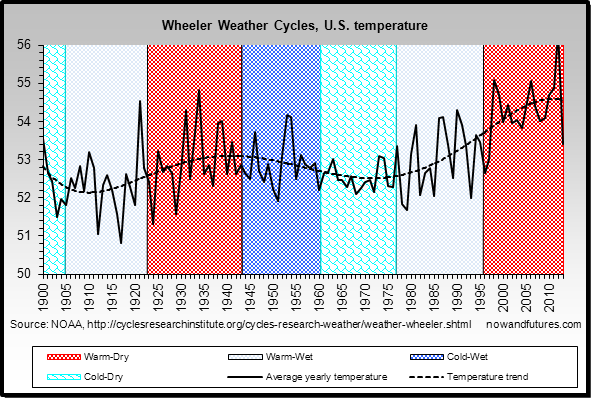
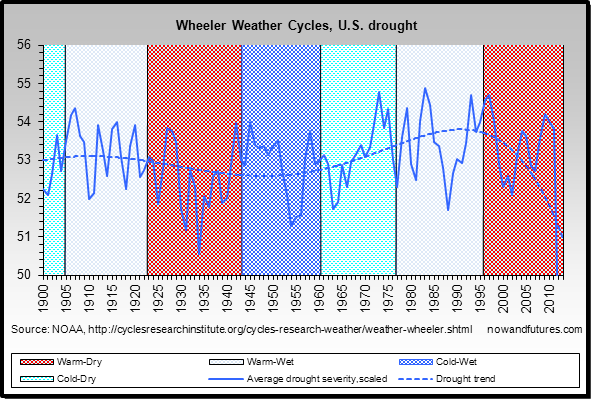
| Cold-Dry (winter) |
1960-1975 |
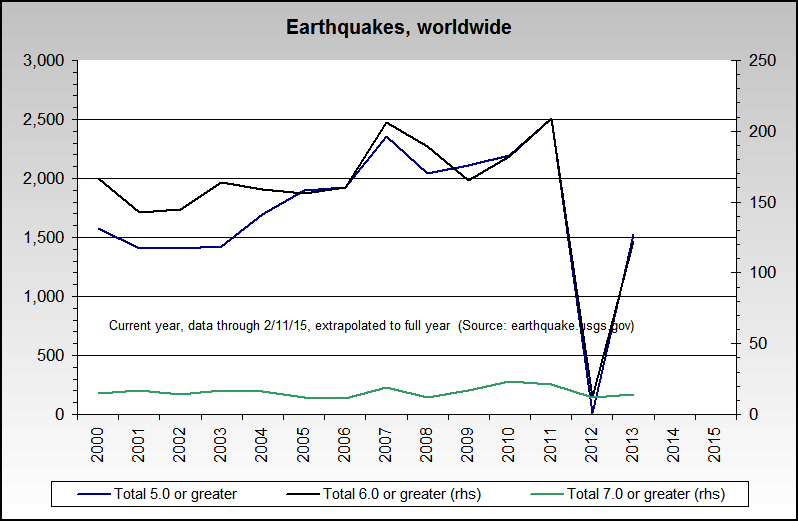
Great leaders, aggressive and independent,civil wars,anarchy, general individualism, more earthquakes & volcanoes. Increased storminess & birthrate, improved general health and mental vigor, migration tendency of the populace to rural areas, economic prosperity. Good international trade, and other forms of intercultural exchange. |
---- |
The cold phases of the 100-year weather cycle are interrupted by a temperature rise during the sunspot maximum. |
| Warm-Wet (spring) |
1978-2000 |
Nationalism, wars, highest energy, low decadence, good prosperity, imperialism, individual less important. |
Learning, genius, good crops, golden ages. |
If there's a cold period and sunspot cycle high during this period, civil wars are likely to occur. |
| Warm-Dry (summer) |
1996-2025 |
Nationalism, wars, despotism, persecutions, tyranny, individual less important. |
Fanaticism, cruelty, and intolerance as measured by inquisitions, persecutions, pogroms, massacres, and tortures, all state-promoted. |
If there's a cold period and sunspot cycle high during this period, civil wars are likely to occur. |
| Cold-Wet (fall) |
2014-2050 |
Aggressive and independent, and promote revolution, civil war, and anarchy, individual gains importance, government and business become decentralized. Art becomes simpler, education is increasingly "mechanistic". |
Decadence, cruelty, slavery, slaughter |
The cold phases of the 100-year weather cycle are interrupted by a temperature rise during the sunspot maximum. |
| |
| |
| |
 |
| |
 |